-

- -20%
- Out-of-Stock
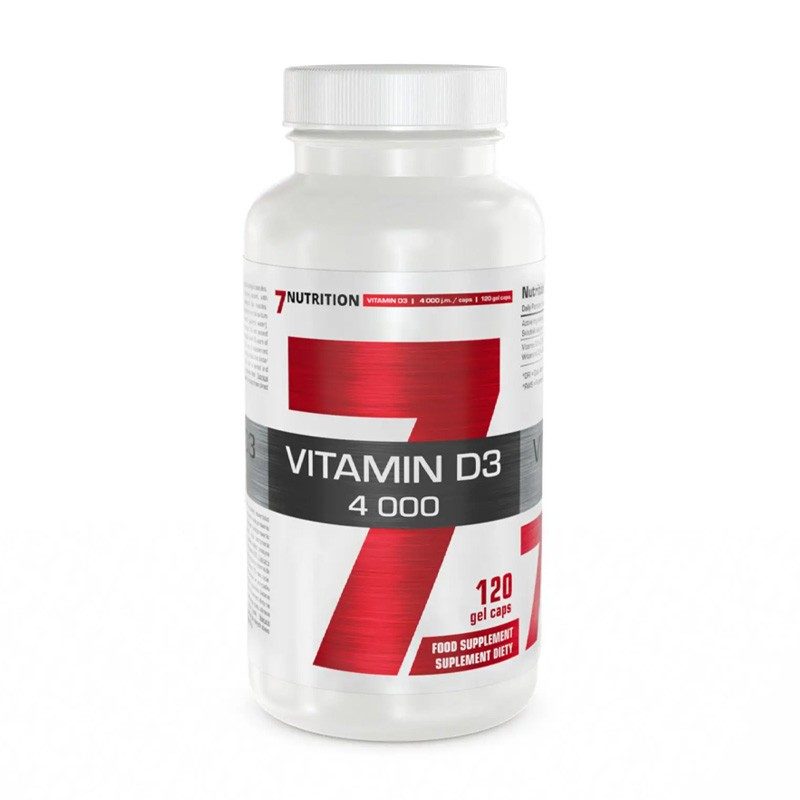
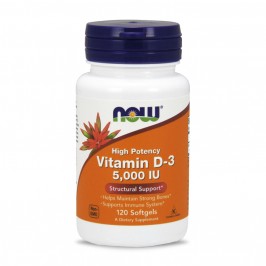
Vitamin D3 maintains healthy bones, youthful skin, an efficient immune system and improves joint health.
Vitamin D can be found in small amounts in some foods, including fatty fish such as herring, mackerel, sardines and tuna. To make Vitamin D more available, it is added to dairy products, juices, and cereals that are said to be "fortified with Vitamin D." But most Vitamin D (80% to 90% of what the body receives) is obtained through exposure to sunlight. Vitamin D can also be produced in a laboratory as a medicine.
Vitamin D is used to prevent and treat rickets, a disease caused by Vitamin D deficiency. It is also used to treat weak bones (osteoporosis), bone pain (osteomalacia), bone loss in people with a condition called hyperparathyroidism and an inherited disorder (osteogenesis imperfecta) in which the bones are particularly fragile and break easily. It is also used to prevent falls and fractures in people at risk of osteoporosis and to prevent calcium and bone loss (renal osteodystrophy) in people with kidney failure.
Vitamin D is used for heart and blood vessel conditions, including high blood pressure and high cholesterol. It is also used for diabetes, obesity, muscle weakness, multiple sclerosis, rheumatoid arthritis, chronic obstructive pulmonary disease (COPD), asthma, bronchitis, premenstrual syndrome (PMS), and tooth and gum disease.
Some people use Vitamin D for skin conditions including vitiligo, scleroderma, psoriasis, actinic keratosis and lupus vulgaris.
It is also used to strengthen the immune system, prevent autoimmune diseases and prevent cancer.
Because Vitamin D is involved in regulating levels of minerals such as phosphorus and calcium, it is used for conditions caused by low phosphorus (familial hypophosphatemia and Fanconi syndrome) and low calcium (hypoparathyroidism and pseudohypoparathyroidism).
Vitamin D in forms known as calcitriol or calcipotriene is applied directly to the skin for a particular type of psoriasis.
Dosage
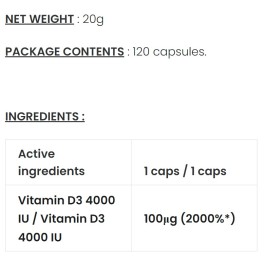
Take 1 gel caps daily with food.

Vitamin D-3 3000 IU 90 capsules of Applied Nutrition is a supplement of Vitamin D3 is a very important element for the calcification of...
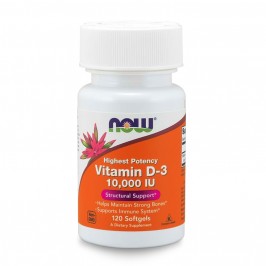
Vitamin D-3 10000 IU of 120 softgels by Now Foods is a supplement of Vitamin D3 obtained from Lanolin, a very important element for the...
Vitamin C with Rose Hips by Haya Labs is a natural food supplement with a high concentration of Vitamin C that stimulates the immune...
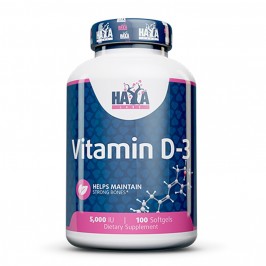
Haya Labs Vitamin D-3 is derived from Cholecalciferol and maintains your bones healthy, young skin, immune system and improves joint...
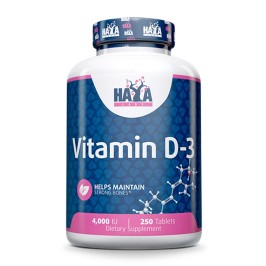
Haya Labs Vitamin D-3 is derived from Cholecalciferol and maintains your bones healthy, young skin, immune system and improves joint...
Vitamin E by Haya Labs is a supplement containing 400ui of Vitamin E for each capsule, equal to 1333% of the daily requirement. Vitamin E...
Haya Labs Vitamin D-3 is derived from Cholecalciferol and maintains your bones healthy, young skin, immune system and improves joint...
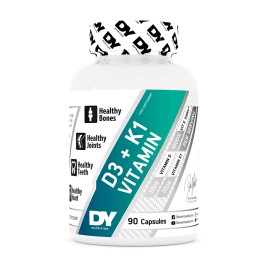
DY Nutrition's Vitamin D+K1 provides high, bioavailable doses of both vitamins, in a form that the body can break down and absorb better...